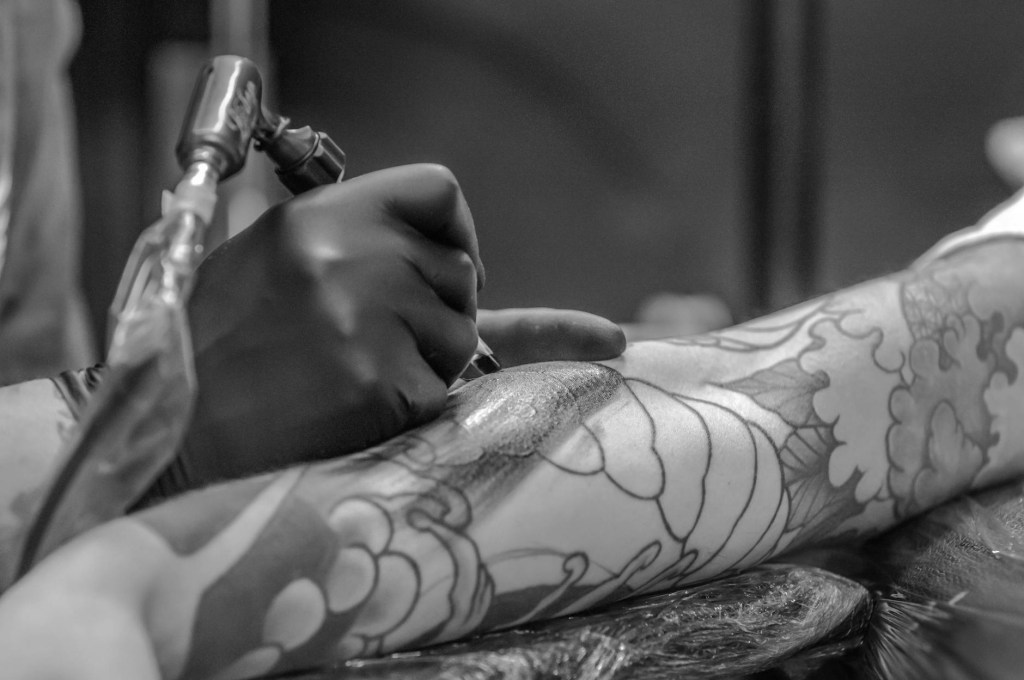
A tattoo is just a ridiculously good looking wound.

Wounds typically heal faster and better when they are kept moist and clean. When skin is not kept moist, scabs can form, affecting the colour and quality of your tattoo.
It is the recommendation of the health unit as well as most health care professionals that a breathable film dressing be used in the aftercare of every tattoo.
A medical-grade, transparent, adhesive bandage dressing that prevents infections and speeds up the healing process will also prevent scabbing. View Guard is a non-sterile, protective, breathable barrier that lets air in, and keeps out dirt, moisture, and germs; resulting in a better-heeled tattoo.
The flexible film can be worn for a maximum of seven days. We have tried them all with different durations of time. We strongly recommend keeping the film dressing on for 3-4 days for optimal healing results.
Step 1:
Leave the dressing on for 3-4 days. During this time, do not lift it, change it or remove it. After removing the dressing, your tattoo will need to be cleaned, unless you are opting to leave the dressing on for longer. The dressing will protect your tattoo from infection, abrasion, irritation and contamination while it is going through the most important part of its healing.
A pocket of fluid under the wound dressing is normal and will not hurt your tattoo. This fluid is lymph or plasma, which your body produces in the healing process.
You can shower while wearing the film dressing but should limit exposure to water as it may lift corners and cause dressing to fall off early. If the dressing begins to lift or fall off before the recommended 4 days, remove the dressing altogether as it will now be possible for dirt or bacteria to enter the dressing and be trapped against the fresh wound.
It is possible that someone may have an allergic or inflammatory reaction to the adhesive in these dressings. If you are seeing redness of the skin extend beyond the tattooed area that reflects the shape of the film dressing, remove it immediately. If you are experiencing any irritation that you suspect may be caused by the dressing, remove immediately.
Step 2:
Remove dressing after the recommended length of time.
Use your clean hands to wash the tattoo (not a cloth). Wash with gentle, unfragranced, or hypoallergenic soap. Strong soaps will likely cause irritation.
Wash your tattoo once or twice daily to prevent infection. If tattoo has come in contact with known bacteria, wash immediately, even if this means washing more than twice in a day.
Over-washing the tattoo will cause it to dry out more than necessary and can cause irritation and extra itchiness. Avoid over- washing when possible. In most cases, washing once daily is enough.
Air dry or blot tattoo with single use paper towel after washing. Never rub a tattoo or use a dirty bath towel to dry after washing.
Moisturize the fresh tattoo each time it is washed. Only use gentle, unfragranced, or hypoallergenic lotion or cream. Strong scents will likely cause irritation, discomfort, redness. Lotions branded specifically for tattoo aftercare such as Hustle Butter or Tattoo Goo may be very soothing but are not mandatory for the healing of the tattoo. Aquaphor is another good quality healing cream that is carried in most drug stores. Always review tattoo aftercare ingredients for potential allergens before use.
You can apply lotion as many times as needed. It is best not to suffocate the tattoo with thick layers of lotion as it needs air to heal. Apply thin layers more frequently.
Once your tattoo is clean and moisturized, avoid rewrapping it unless using sterile gauze or a breathable film dressing.
Do not submerge covered or uncovered healing tattoos in a bath or expose to shower water for longer than the time it takes to wash the tattoo. A bath could cause infection if bacteria is in the bathtub. Exposing the tattoo to water for too long will cause water-logging; where the healing skin gets soggy and fragile. The soggy skin rubs off and tears very easily, causing unnecessary bleeding, scabbing, significantly longer healing times and could result in holes in your healed tattoo where the skin has torn and caused scar tissue.
Do not put sunscreen on a new tattoo for at least 2 weeks as it can cause irritation. Do not expose new tattoo to the sun at all before the skin is healed enough to apply sunscreen. After the tattoo has fully healed, you should always apply sunscreen to the tattoo as the sun is the number one cause of fading.
Skin usually begins to peel between day 5 and day 14. Shedding your top layer of skin is a normal part of healing but scabbing does not need to be.
Irritation, Abrasion, and early stages of Infection all look and feel the same. The area will be sore to touch, usually red, and sometimes slight swelling will occur.
Irritation is caused by harsh soaps and lotions. You will likely feel a burning or stinging sensation shortly after washing or applying the lotion to the tattoo area. Please be advised that it is still possible to get an infection from soaps and lotions that have been contaminated. Opt for soap and lotion dispensers with a hand pump instead of tins or jars requiring you to put your hands or fingers in. Always check the expiry on products prior to use.
Abrasion is caused primarily by tight clothing and straps but can be caused by any object or material rubbing against the tattoo, including swinging your arms when you walk. Please be conscious of your tattoo at all times for 2-4 weeks and specifically the first 7-10 days.
Infection is caused by bacteria coming into contact with your open skin. A tattoo is a wound and needs to treated as one to ensure proper healing. If you are concerned at any time during the healing process that your tattoo might be infected, please seek medical advice immediately. The early signs of infection look just like irritation and abrasion; If you are uncertain which you are experiencing, please accept the possibility that it could be an infection and seek medical advice immediately. If left untreated, swelling, more severe pain and redness will likely occur. The area will begin to feel hot to the touch. You may begin to have fevers and chills if left untreated.
 Black Lamp Tattoo